

Micron Technology is in the middle of an approximately $50 billion expansion of its semiconductor manufacturing and research campus in Southeast Boise, a project expected to create more than 17,000 jobs and, most recently, the addition of a $10 billion Micron Research Labs headquarters announced August 20, 2026. For the Treasure Valley, the buildout represents a multi-year, potentially multi-decade driver of housing demand across Boise, Meridian, Eagle, Kuna, Nampa and Caldwell, as thousands of workers and their families relocate to the region.
Reshaping the Treasure Valley
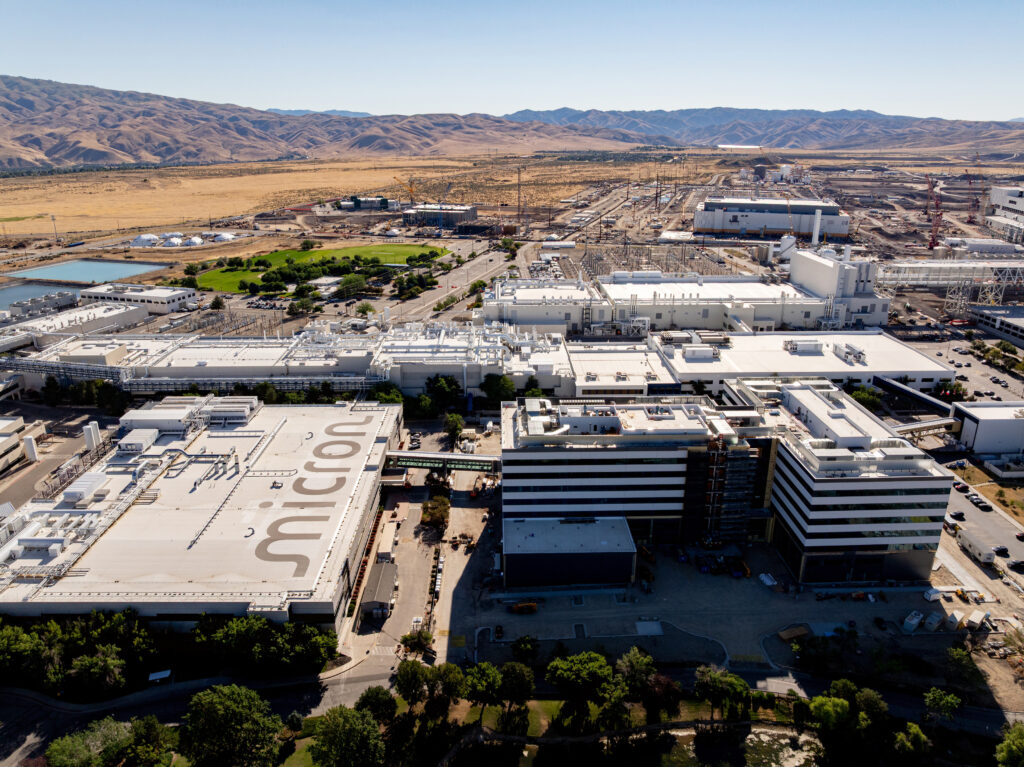
For a company that was born in Boise nearly 50 years ago, Micron Technology has always been part of Idaho’s story. But what is happening today is on an entirely different scale.
Micron is in the middle of one of the largest economic development projects in Idaho history, building a new generation of semiconductor manufacturing and research facilities in Southeast Boise. The investment is positioning Boise not only as a home for a major technology company, but as an increasingly important hub for memory, artificial intelligence and advanced semiconductor research.
And the effects will extend far beyond Micron’s campus. Thousands of jobs, new workers relocating to the Treasure Valley, additional construction and business activity, and growing demand for housing are all likely to influence how the region develops over the next decade and beyond.
A $50 Billion Investment in Boise
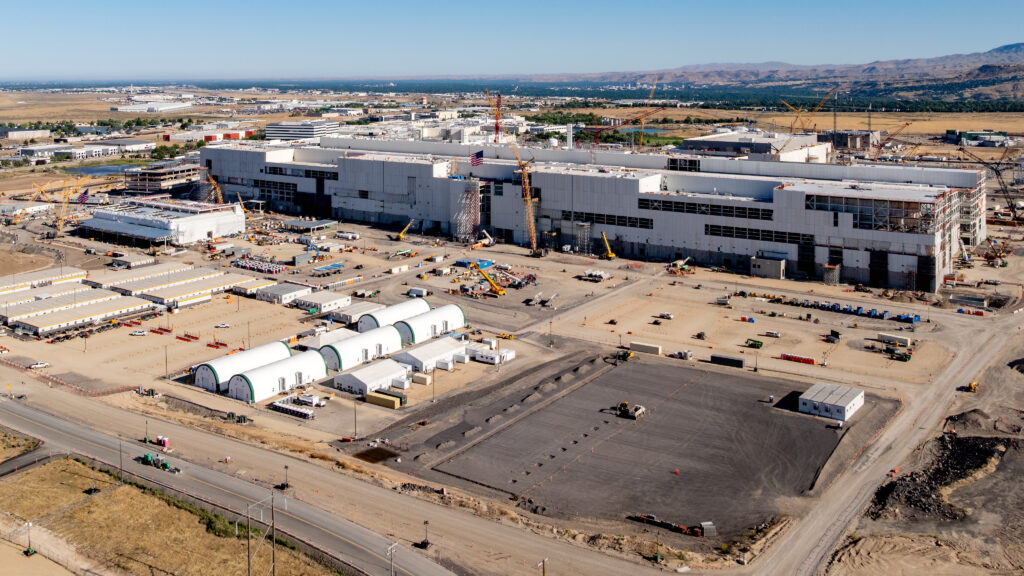
Micron’s Boise expansion includes plans for two leading-edge memory fabrication plants, or fabs, at its Southeast Boise campus. Together, the Idaho projects represent an anticipated investment of approximately $50 billion.
The scale is remarkable. Micron says the Idaho expansion is expected to create more than 17,000 jobs, including direct Micron positions and indirect jobs throughout construction, suppliers, logistics and other supporting industries.
Construction on the first fab began in 2023, and Micron currently expects meaningful DRAM production to begin in 2027. The facility will be co-located with Micron’s existing Boise research and development operations, bringing manufacturing and research together in one location.
The project is part of an even larger commitment by Micron to expand semiconductor manufacturing and research in the United States. The company has announced more than $250 billion in U.S. manufacturing and R&D investments, with the goal of strengthening domestic memory-chip production at a time when demand for advanced computing and artificial intelligence is accelerating.
Boise Is Becoming an AI and Semiconductor Hub

The newest announcement may ultimately be just as important as the manufacturing facilities themselves.
On August 20, 2026, Micron announced plans to establish Micron Research Labs, a new research institution headquartered in Boise. The company plans to invest $10 billion over the next decade in the lab, which is expected to break ground in 2027 and bring together hundreds of researchers.
The research effort will focus on advanced memory technologies, compute architectures and technologies supporting future semiconductor manufacturing. Micron plans for the Boise headquarters to connect with research operations around the world.
That matters because memory has become increasingly important to the artificial intelligence revolution. AI systems require enormous amounts of fast, high-bandwidth memory, and Micron is positioning Boise at the center of that technology.
In other words, Boise isn’t simply gaining a giant manufacturing facility. It is becoming part of the infrastructure supporting the next generation of technology.
What Does This Mean for Boise Real Estate?
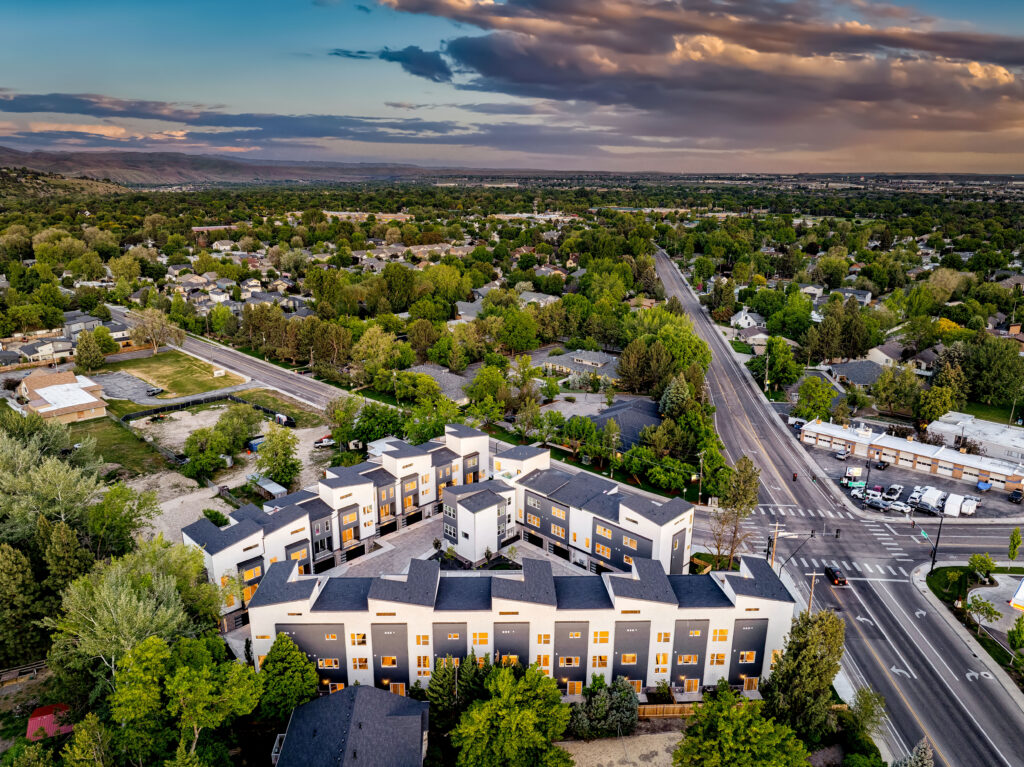
For the Treasure Valley housing market, Micron’s expansion represents something much bigger than a short-term increase in construction activity.
People need places to live.
During the construction phase, thousands of workers are involved in building the fabs. As the facilities become operational, Micron will add highly skilled positions in engineering, manufacturing, research, technology and other fields. Those workers will need housing, and many will bring spouses, children and extended household needs with them.
The impact is already being felt.
Local real estate professionals have reported increased interest from people relocating to the area for Micron-related work, while contractors and other workers connected to the expansion are also looking for both temporary and permanent housing.
This creates demand at multiple levels of the market:
- Short-term rentals for workers who are temporarily assigned to Boise
- Long-term rentals for employees moving to the area before purchasing
- Entry-level and move-up homes for new employees and families
- New construction to accommodate population growth
- Higher-end housing for executives, engineers and highly compensated technology professionals
- Commercial real estate for businesses and suppliers supporting the semiconductor ecosystem
The Ripple Effect Across the Treasure Valley
Micron’s campus is located in Southeast Boise, so neighborhoods closest to the project are naturally positioned to see some of the most direct effects.
But Boise is already a connected housing market.
When demand increases in one area, buyers often expand their search into surrounding communities. For Micron employees and contractors, that could mean looking at Southeast Boise, East Boise, Harris Ranch and Columbia Village and nearby areas, but also considering homes in Meridian, Eagle, Kuna, Nampa, Caldwell and other parts of the Treasure Valley depending on commute, price and lifestyle.
This is one reason Micron’s expansion could become a Treasure Valley-wide housing story rather than simply a Boise story.
The region has already demonstrated how quickly employment growth can influence housing patterns. More jobs can attract more residents, and more residents create demand for homes, apartments, schools, restaurants, retail, healthcare, services and transportation.
Boise’s mayor has specifically identified planning around the airport and Micron campus as an opportunity to create well-connected communities incorporating jobs, parks, services and transportation.
Out-of-State Buyers Are Part of the Equation
One of the most interesting aspects of Micron’s growth is the potential for relocation from outside Idaho.
Micron is competing for highly specialized talent in an industry that is global by nature. Some of the people needed to fill engineering, research, technology and management positions will already live in Idaho—but others will come from across the country and around the world.
For those relocating to Boise, the decision isn’t simply about finding a job.
They’re evaluating schools, neighborhoods, commute times, recreation, housing costs, taxes, quality of life and what the community will look like five or ten years from now.
That’s where Boise’s broader appeal becomes important.
The Treasure Valley offers a combination of outdoor recreation, a growing technology sector, established employers, relatively easy access to the outdoors and a lifestyle that can be difficult to find in larger metropolitan areas.
Micron’s expansion adds another powerful reason for people to consider Boise.
Housing Supply Will Be One of the Biggest Questions
The opportunity is significant—but so is the challenge.
More jobs and more people create more housing demand. If housing supply doesn’t keep pace, competition can increase and affordability can become more difficult.
Boise and the Treasure Valley have already spent years working through the effects of rapid population growth and a shortage of housing. While the market has become more balanced from the extreme conditions seen earlier this decade, affordability remains an important issue.
Recent market data illustrates that the housing market is already moving again. In Ada County, the median sales price reached approximately $580,000 in June 2026, about $45,000 higher than January, according to a market report from Boise Regional REALTORS® data.
That doesn’t mean Micron is solely responsible for current home-price movement—interest rates, inventory, consumer confidence, employment and many other factors influence real estate.
But sustained employment growth creates an important underlying source of housing demand.
And that’s the key distinction with Micron.
This isn’t expected to be a one-year event.
It is a multi-year, potentially multi-decade transformation.
New Construction Will Become Increasingly Important
As thousands of additional workers and families enter the region, new housing will be critical.
That could mean more single-family homes, townhomes, apartments and mixed-use developments throughout the Treasure Valley.
It could also influence where development occurs.
Communities with reasonable access to Micron and other major employment centers may become increasingly attractive, particularly when they offer newer homes, attainable price points, schools, parks and convenient transportation.
This could accelerate development in areas farther from Boise’s urban core as buyers balance commute times with affordability.
At the same time, existing homeowners may benefit from increased demand for established neighborhoods—particularly homes in locations that offer desirable amenities and reasonable access to employment centers.
It’s About More Than Home Prices
When a major employer expands, it’s tempting to look only at what it might do to home values.
But the broader economic impact may be even more significant.
Micron’s investment can create demand for:
Construction and trades.
Thousands of construction workers are needed to build and expand the facilities.
Suppliers and manufacturers.
A semiconductor operation requires a massive network of suppliers and specialized services.
Transportation and logistics.
More workers, materials and businesses mean greater demand on roads and transportation systems.
Retail and restaurants.
New households spend money in the communities where they live.
Healthcare and professional services.
Population growth increases demand for doctors, dentists, financial services, attorneys and other professionals.
Education and childcare.
More families mean more demand for schools, childcare and youth services.
Commercial real estate.
Companies supporting Micron may need offices, warehouses, industrial space and other facilities.
The result can be a multiplier effect—one major investment creating economic activity well beyond the company’s own payroll.
Infrastructure and Growth Will Have to Keep Pace
Of course, growth at this scale doesn’t come without challenges.
Roads, utilities, schools, public services and transportation will all need to accommodate additional residents and workers.
The area around Micron’s campus is already seeing planning discussions about future roadways and access. Boise and the Ada County Highway District have been working through how transportation infrastructure should evolve alongside the company’s expansion and surrounding residential development.
Housing is another major consideration.
Micron has established an Idaho Community Investment Framework that includes workforce development, STEM education and community engagement. The company has also said it will explore improvements to transportation and housing in the Treasure Valley, and it has committed $75 million over 10 years toward the priorities outlined in the framework.
Micron has also supported local housing initiatives, including a $1 million multiyear grant to the Idaho Community Foundation’s Supportive Housing Investment Fund.
The challenge will be making sure that growth creates opportunity while maintaining the qualities that have made the Treasure Valley attractive in the first place.
Looking Toward 2030—and Beyond
The most interesting thing about Micron’s expansion may be that we’re still relatively early in the story.
The first fab is expected to begin production in 2027. The second fab will follow as the broader project develops. And now, the addition of the $10 billion research laboratory creates another long-term layer of investment and employment in Boise.
That means the full impact won’t happen overnight.
Instead, we could see a gradual transformation:
Today: Construction, infrastructure investment and workers supporting the buildout.
2027 and beyond: The first fab begins production and permanent manufacturing jobs grow.
The next several years: Additional housing, businesses and services develop around the expanding workforce.
The next decade: Boise’s research and semiconductor ecosystem becomes increasingly established, attracting additional talent, investment and supporting businesses.
Beyond: Micron’s presence could help permanently change Boise’s position in the national technology landscape.
A New Chapter for Boise

Boise has long been known for its quality of life, outdoor recreation and growing economy. But Micron’s expansion represents an opportunity to add another defining characteristic to that identity.
Innovation.
The company was founded here. Its headquarters are here. Its research and development operations are here. And now, some of the most significant investments in advanced memory manufacturing and AI-related research are being built here.
For real estate, that means the next several years could bring continued demand from employees, relocating families, investors, businesses and people who simply want to be part of a growing community.
It doesn’t mean home prices will rise indefinitely, or that every neighborhood will experience the same impact. Real estate is local, and interest rates, inventory and economic conditions will continue to shape the market.
But one thing is increasingly clear:
Micron’s Boise expansion is not simply a construction project. It is an economic transformation.
And as the cranes continue to rise in Southeast Boise, the effects will likely be visible throughout the Treasure Valley—in our neighborhoods, our housing market, our workforce and the way people around the country view Boise.
For buyers and sellers, it’s another reason to look beyond today’s market and consider where the Treasure Valley is headed.
The future of Boise is being built right now.
Frequently Asked Questions
How much is Micron investing in its Boise expansion? ▸
Micron’s Boise expansion represents an anticipated investment of approximately $50 billion, covering two leading-edge memory fabrication plants at its Southeast Boise campus.
How many jobs will Micron’s Boise expansion create? ▸
Micron expects the Idaho expansion to create more than 17,000 jobs, including direct Micron positions and indirect jobs in construction, suppliers, and logistics.
When will Micron’s new Boise fab begin production? ▸
Construction on the first fab began in 2023, and Micron currently expects meaningful DRAM production to begin in 2027.
What is Micron Research Labs? ▸
Micron Research Labs is a new research institution headquartered in Boise, announced August 20, 2026, with a planned $10 billion investment over the next decade and groundbreaking expected in 2027.
How will Micron’s expansion affect Boise real estate? ▸
Thousands of construction workers, engineers, researchers and their families are expected to need housing, creating demand across short-term rentals, entry-level and move-up homes, new construction, and higher-end housing.
Which Boise neighborhoods are closest to Micron’s campus? ▸
Micron’s campus is located in Southeast Boise, with the most direct effects expected in Southeast Boise, East Boise, Harris Ranch and Columbia Village.
Will Micron’s growth affect housing outside Boise? ▸
Yes, because Boise is a connected housing market, demand is expected to extend into Meridian, Eagle, Kuna, Nampa and Caldwell as buyers weigh commute times, price and lifestyle.
What is the median home price in Ada County in 2026? ▸
The median sales price in Ada County reached approximately $580,000 in June 2026, about $45,000 higher than in January, according to Boise Regional REALTORS® data.
Is Micron solely responsible for rising Boise home prices? ▸
No, Micron isn’t solely responsible for current home-price movement — interest rates, inventory, consumer confidence and employment all influence the market — but sustained employment growth from the expansion adds an important underlying source of housing demand.
Is Micron investing in Treasure Valley housing and infrastructure directly? ▸
Yes, Micron has committed $75 million over 10 years to its Idaho Community Investment Framework, which includes workforce development, transportation and housing priorities, plus a $1 million grant to the Idaho Community Foundation’s Supportive Housing Investment Fund.
Why does memory technology matter for artificial intelligence? ▸
AI systems require enormous amounts of fast, high-bandwidth memory, which is positioning Micron and Boise at the center of the technology supporting next-generation computing.
Are out-of-state workers relocating to Boise for Micron jobs? ▸
Yes, Micron is competing for specialized engineering, research and technology talent globally, meaning some new hires will relocate to Boise from other states and countries.
What is Micron’s total planned U.S. manufacturing investment? ▸
Micron has announced more than $250 billion in total U.S. manufacturing and R&D investments as part of its broader push to strengthen domestic memory-chip production.